Posted by Ed Caldeira on Mon, Jul 26, 2010 @ 04:07 PM
An Inspection Test Plan (ITP) is a commonly required document that you'll need to submit with your construction quality control plan. Whether you're working on a private sector or government contract, clients today all want to see your inspection test plan. They want to know exactly what inspections and tests you'll be forming to control quality on their project.
In addition to telling your client what inspections and tests you'll do to control quality, your ITP is also a checklist for you to log the results of your inspections and tests during the project.
So what should you include on your inspection and test plan anyway?
The following 7 tips will help you to create your inspection and test plans:
1) Before you can start, you'll need an inspection test plan form. Click on this link, and you can download one free from our website: Inspection Test Plan Form Templates.
2) Complete the form by, first, adding your task inspections. List a task inspection for each Definable Feature of Work (DFOW), also known as a construction task or a phase of work.
3) Now, add your milestone inspections. These are inspections at the completion of each major piece of work. For example, this could be at the completion of a foundation or each floor in a high-rise.
4) Next, look at your project specification, and add the required inspections and tests from it.
- DO include tests that you hire an independent testing agency to perform.
- DO include inspection hold points.
- DO NOT include inspections conducted by your client, as that is their own quality control, not yours.
5) Finally look in the Division 01 General Requirements section of your specification for any special inspections to add to your inspection test plan. These could be such things as field assessments and final closeout inspections.
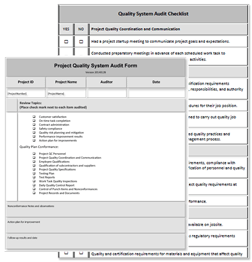
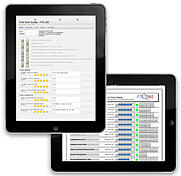
Click the image on the left to see the first page of a completed Inspection Test Plan.
Once you have a good template and know what to include, putting together an inspection test plan becomes very straightforward.
Posted by Ed Caldeira on Wed, Jul 14, 2010 @ 02:11 PM
For all U.S. Army Corps of Engineers (USACE) and Naval Facilities (NAVFAC) Government projects, you’ll need to provide a list of your Definable Features of Work as part of your contractor quality control plan.
If you’re not already familiar with the term, Definable Features of Work (DFOW) are what you might think of as construction tasks or phases of construction.
The Corps of Engineers describes a DFOW as a task that is separate and distinct from other tasks and has control requirements and work crews unique to that task. A DFOW is identified by different trades or disciplines and is an item or activity on the construction schedule.1 So, for example, excavation, electrical, concrete, roofing, mechanical, HVAC, etc. are all Definable Features of Work.
When it comes to deciding on your DFOW, you’ll want to define your features narrowly enough to ensure adequate quality controls, yet, not so narrowly that you cause yourself a lot of unnecessary work.
Keep in mind that for each definable feature, you’ll be required to perform the Three Phases of Control, which means you’ll be performing a series of planning, inspection, and record keeping procedures for each.
The following steps will help you find the right balance for your Definable Features of Work.
Step One
Start by including one DFOW for each specification in the CSI construction specifications section of your contract e.g. 03 30 00 Cast-In-Place Concrete.
For example, each
checked line item below should be a separate Definable Feature of Work.

Step Two
Next, add to or replace general category tasks with tasks that meet the following criteria:
- It requires quality controls such as inspections
- It has trades, work crews, or disciplines unique to that task
- It is a critical path activity on the schedule
- It is monitored by a QC Specialist or specialty inspection personnel
For Example, in place of the general category Cast-In-Place Concrete, you would add the following to your DFOW list:
Concrete Form Work and Placing Reinforcement
Placing Concrete, Finishing, and Curing
By following these steps, the process of deciding on your definable features of work will become much more clear-cut and straightforward. As with most things, experience makes the best teacher.
1 USACE-NAVFAC-AFCESA-NASA_Quality_Control_Requirements_UFGS-01_45_02.pdf
Posted by Ed Caldeira on Fri, Jun 11, 2010 @ 09:27 PM
As a construction quality consultant, one trend I’m seeing is that more project owners are asking for construction quality control plans. And, it’s clear that this practice is increasing.
Now, not only do you need to produce quality, defect-free work, you also need to formally document your quality practices.
Explaining what you do and the specific ways you’ll carry out your quality practices on each project will become part of your project contract. It's no longer good enough to just say that you control quality.
Once only a requirement on government projects, I’m also seeing more and more quality plans required on non-government projects as well (although, it is still more common on government jobs).
In any event, you'll want to be prepared to provide your clients with a well-formulated quality control plan including a quality manual, project plan, standard operating procedures and submittal forms.
Here's a short list of do's and don'ts based on some of the common mistakes I see with quality plan submittals.
- Don’t appoint a superintendent as your quality manager. Clients want to see independence between the person who is responsible for the overall quality of your work and the person responsible for production.
- Do include a separate policy in your quality manual for the preparation of your project quality plan.
- Don’t forget to include local building codes in your quality plan. They apply even though your client may not have listed them in the contract specifications.
- Do provide a cross-reference table between your client’s requirements and your submittal. You need to make it easy for your client to see how you meet the contract specifications. This also makes it easy for you to cross check that you have addressed each required element in your contract specifications.
- Don’t forget to include a standard operating procedure for each submittal form. Often companies will have forms but not the accompanying procedures, which should include the purpose, scope, and references regarding the forms.
- Do look for quality-related specifications in all sections of your contract, even sections other than the QA/QC section. Quality-related requirements can be included throughout the contract.
The trend of requiring formal quality plans as part of construction contract submittals is here to stay. Whether you’re putting a quality plan submittal together now or will need one in the future, keep these tips in mind and you’ll avoid some of the more common problems.
~I'd appreciate hearing your thoughts. Please share your critique / approaches / feedback in comments below.
Posted by Ed Caldeira on Wed, Jun 02, 2010 @ 11:56 AM
You certainly don’t want to leave something out of your construction quality control plan that is needed or will get your plan rejected. On the other hand, you don’t want to add any unnecessary complexity either.
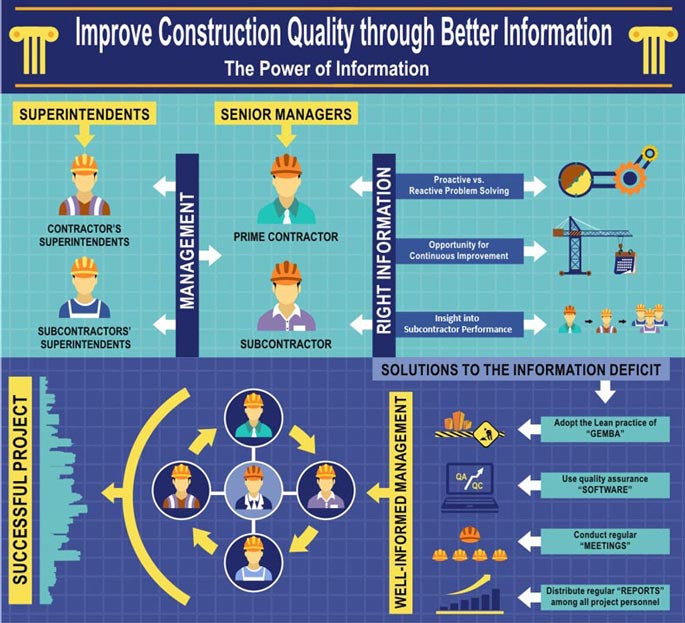
For starters, you’ll want to remove procedures that your client doesn’t actually require... And (more importantly) that you don’t intend to do.
Next, you’ll want to remove unnecessary detail in your quality control plan that can work against you.
Don’t get me wrong, I’m not saying you should try to get away with the bare minimum level of construction quality controls.
However, I am saying that you should consider the different levels of quality controls suitable for different projects and modify your construction quality control plan accordingly. The goal is to promise the right level of quality controls to make everyone happy -- you, your client, and your workers.
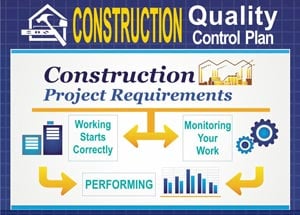
Whether you’re purchasing a construction quality control plan template or developing your plan from scratch, you’ll want to pay attention to these six Dos and Don’ts:
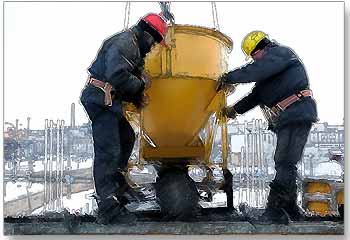
- Don’t say your Quality Manager performs ALL your inspections.
The role of your quality manager is to provide oversight and to validate that your quality processes are working. Construction superintendents will do most of your inspections. So, make sure to specify which inspections your quality manager will do and which ones your superintendents will do.
- Do customize the list of records you’ll keep based on each project’s requirements.
Some projects are short and simple, and therefore, don’t require a high level of record keeping. On the other hand, some projects do warrant detailed record keeping. You should modify your construction quality control plan to reflect the record keeping needs of each project.
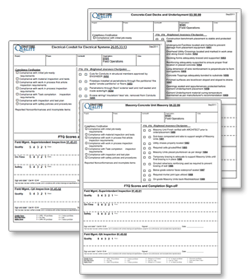
- Don’t submit every form you own.
Here again, it’s important that you only submit the forms you need for each specific project. Otherwise, your client will expect you to carry out all the procedures connected with the forms you include in your quality control plan.
- Do limit the detail on your list of Quality Controlled Construction Tasks.
A good practice is to list all the phases of construction (i.e. definable features of work) where you do an inspection at the completion of the task. It’s not necessary to include all the phases of construction that are on your project schedule.
- Don’t add too much detail to your inspection forms.
Inspection forms are for recording the completion of inspections. They’re records that the inspections took place, not records of your quality control standards. A good practice is to include about a dozen of your most important checkpoints, not a long list of minor construction details. Adding too many checkpoints can complicate matters for you.
- Don’t address each punch item as a nonconformance.
Most punch items are work in process corrections and not nonconformances. They’re easily corrected and don’t require the same level of quality controls as nonconformances. Your quality manual should differentiate work in process corrections from nonconformances. I suggest you handle items as nonconformances if they meet BOTH of these criteria: (a) items that do not meet project quality standards; and (b) only items remaining after the final task inspection has been completed.
The key to managing costs and liabilities is to provide the appropriate level of quality controls for each project. Your quality control plan is an extension of your contract and thus, a legally binding document. Promise too little and your client won’t be happy. Promise too much and you won’t be happy. Promise just the right amount and everyone is happy.
What is your approach to simplifying your construction quality control plan?
Please share your critique / approaches / feedback in comments below.
Posted by Ed Caldeira on Tue, Mar 02, 2010 @ 07:55 AM
A project quality plan is a written plan that details how you will manage quality on a specific construction project.
This is different from a quality manual, which explains your quality policies and procedures in general, but not with information specific to each project.
Clients may ask for project quality plans in different ways. One way may be that your contract says you need to submit a quality control plan. Another way may be that your client comes out and asks for a project quality plan.
In most cases, everyone wants the same thing: your quality manual, standard operating procedures, and the project plan.
Below is a list of questions your project plan should answer. Underneath each question, I’ve listed the form(s) you can include in your plan on which to give your answers (i.e. the information your client wants).
Project Quality Plan
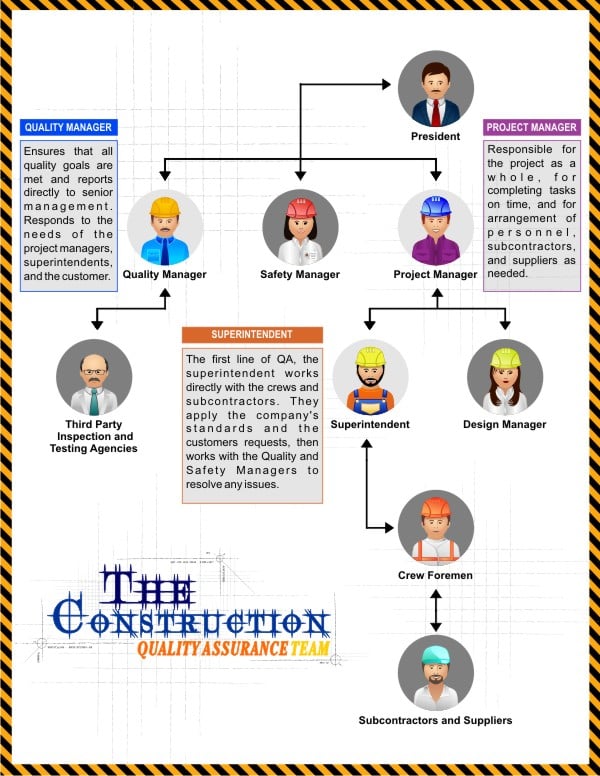
Who’s on the project quality management team?
- A Project Organization Chart
What makes them qualified to be there?
- Appointment Letters defining the responsibility and authority for each team member’s position
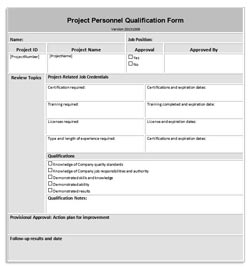
- Personnel Qualification Form verifying the capabilities of each team member and who approved them
- Resume for each team member
What training will you provide to make sure your people have the necessary skills and knowledge for this project? Will you train your customer on operations and maintenance? This should include quality system, quality procedures, and the technical training.
- Training Plan indicating the training and who has received it
Who are the points of contact for the project?
How will you make sure all quality-related information gets to the people that need it?
- Project Quality Communications Plan
What documents, reports, and records will you submit, by when, and to whom?
- Project Submittals Schedule and Log
Project-Specific Standards
What regulatory codes and industry standards apply to this project?
- Project Regulatory Codes and Industry Standards Form
Project-Specific Inspections and Tests
What inspections and tests will you conduct for this project? How will you record each inspection and test?
- Inspection and Test Plan Form
- Quality Controlled Construction Task Form
What measuring devices need calibration and how often?
- Measuring Devices Calibration Form
Project Purchasing
What credential and resources do your key subcontractors need such as licenses, insurance, production capacity? Also, how do their quality programs meet your requirements?
- Subcontractor and Supplier Qualification Form
Who are your qualified suppliers and what materials will they supply?

Download 2 Free Project Quality Plan forms:
1. Project Quality Plan Form (to use as a checklist for your quality plan submittal)
2. Quality Manager Appointment Form (to appoint your quality manager and assign quality responsibilities and authority)
About the Author - Ed Caldeira is founder of Caldeira Quality, specializing in custom quality control plans, First Time Quality construction quality assurance program implementations and FTQ360 performance management software. He can be reached at www.FirstTimeQuality.com.
Posted by Ed Caldeira on Sun, Feb 07, 2010 @ 10:20 AM
No sense reinventing the wheel... Using a template is a good starting point to develop your quality control plan.
But... it's not good practice to buy a template and just stick your name on it.
Your quality control plan should describe your quality methods, policies, and practices.
Here are some tips for customizing a template to your specific company QA/QC program.
1. Find a quality control plan template that has all the components you need including:
- Quality Manual
- Standard Operating Procedures
- Submittal Forms
2. Change general information into company-specific information.
Most quality manual templates use vague generalities to describe quality methods and policies. Below is an example of typical template wording that's vague, without specific detail.
|
All employees have the responsibility and authority for implementation of established QA/QC activities ... to:
- Initiate action to prevent the occurrence of work or service non-conformity;
- Identify and record any quality problems;
- Initiate, recommend, or provide solutions through designated channels;
- Verify the implementation of solutions;
- Control further processing, delivery, or installation of non-conforming work until the deficiency or unsatisfactory condition has been corrected.
|
Did you notice the general term "all employees"? I’d be very surprised if “all employees” in your company have the same quality responsibilities and authority.
So, change your template to include specific information about all key positions responsible for making sure that jobs are done right -- quality.
The example below shows clearly defined information for one such key position, the superintendent.
|
Caldeira Construction superintendents verify that work performed by subcontractors and Caldeira Construction work crews conforms to Caldeira Construction quality standards.
Caldeira Construction superintendents have specific responsibilities for:
- Ensuring that construction meets government regulatory and code requirements, customer requirements, contract requirements, contract technical specifications, contract drawings, approved contract submittals, and company quality standards and specifications
- Ensuring that subcontractors begin work in accordance with Excel Construction start-work policies
- Ensuring that subcontractors receive a notice to work only when conditions will not adversely affect quality results
- Conducting inspections, tests, and recording findings
- Accurately assessing subcontractor quality and on-time performance
- Ensuring that quality standards are achieved before approving subcontractor or work crew completion of work
Caldeira Construction superintendents have the authority to:
- Stop work when continuing work may adversely affect quality or cover up a defect
- Prevent the use of materials that may adversely affect quality
- Direct the removal or replacement of any non-conforming work or material
- Suspend work and/or supply of materials as deemed necessary to assure quality results
|
3. Add details
Take the time to include details. Here is another typical template example of vague wording without specific detail.
|
The Project Manager shall establish and maintain procedures to ensure that any work that does not conform to specified requirements is prevented from inadvertent release to the client. |
What procedures? After reading this example, will your client and company personnel know your nonconformance policy?
Here is an example that provides the needed detail.
|
When Caldeira Construction superintendents or inspectors identify nonconformances, they quickly mark the nonconformances with Caldeira Construction nonconformance tags to prevent inadvertent cover-ups. |
In Conclusion
Evaluate several different quality control plan templates and choose the one that has the most detail. After all, the less you have to “reinvent the wheel” the better.
Thoroughly read over the document, and tailor it to include your company's quality methods and policies.
Change vague, generalities to company-specific information, and add details.
Need a quality plan?
We offer comprehensive quality plan templates tailored to meet your company and project requirements. No need to reinvent the wheel!
About the Author - Ed Caldeira is founder of Caldeira Quality, specializing in First Time Quality construction quality programs and FTQ360 performance management software. He can be reached at www.FirstTimeQuality.com.
Posted by Ed Caldeira on Fri, Jan 22, 2010 @ 04:13 PM
If you want a shot at winning a government construction contract, you'll want to dive in and tackle the mound of documents you'll need for your comprehensive quality control plan.
Quality control plans for government contracts require a substantial collection of documents, records, and forms. Their purpose is to communicate what you do to assure consistent quality results on every job.
A good quality control plan will show your clients that your company can fit into their quality systems.
What documents do you need?Most government agencies with comprehensive QA/QC requirements want specific submittals during each phase of construction. The phases include:
- Bid Qualification Phase
- Pre-Construction Phase
- Construction Phase
Here is a list of most of the documents or submittals you'll need for each phase of construction.
Bid Qualification Phase Submittal Documents - qualify your company to manage and deliver quality work
Pre-Construction Phase Submittal Documents -part of your project quality plan-- detail how you will manage and deliver quality on this project.
- Organization Chart – identifies the management team responsible for ensuring project quality
- Quality Personnel’s Qualifications form – lists the qualifications of your quality management team
- Quality Personnel’s Appointment letter– gives your quality management team authority for ensuring project quality
- Quality Training Plan – establishes your training plan for quality-related activities
- Regulatory codes and standards form - lists the regulatory codes and standards you comply with
- Industry standards form – outlines the industry standards you comply with
- Inspection and Test Plan form– describes the inspections and tests you conduct
- Selection of key suppliers and subcontractors form – explains you supplier and subcontractor selection process
- Material and equipment specification form – records specifications for the material and equipment you use
- Communications plan form - records a summary of monthly project status reports
Construction Phase Submittal Documents - provide a record of how you carried out your project quality plan
- Inspection and Test Records – records the results from your planned inspections and tests
- Nonconformance Reporting – documents any work or materials found during inspections and tests that don’t meet (conform to) your standards
- Daily Construction Reporting – summarizes what happened on the job site that day
- Training Records – lists training sessions that were conducted for preventive as well as improvement purposes
- Quality System Audits – defines the preventive actions you take because of your monthly project quality system audits and your annual company-wide quality system audit.
- Document Control Records – explains the controls you use to keep your quality system records up-to-date, accurate, and safe
The way you show your client that you have a good QA/QC program with good systems in place is by showing them your system documentation. In other words, you need to show them a good quality control plan.
Get started with developing your quality control plan by documenting the quality processes you do now.
Follow that up with a plan to improve upon your existing quality systems, and you'll be ready for that government construction contract.
And, don't forget... always document your quality processes.

Get Two Free Project Quality Plan Submittal Forms.
About the Author - Ed Caldeira is founder of Caldeira Quality, specializing in
First Time Quality construction quality programs and
FTQ360 performance management software. He can be reached at
www.FirstTimeQuality.com.
Posted by Ed Caldeira on Sun, Jan 10, 2010 @ 10:08 PM
This is the first in a series designed for general contractors to take some of the frustration out of understanding your client’s quality assurance and quality control plan requirements.
It's also intended to help you develop a quality plan to meet those requirements.
Here are a few steps to follow:
1. Identify all the quality requirements within your contract
There's usually a quality assurance specifications section in your contract. That's where most of your quality requirements will be.
Also check other sections for “quality assurance” and “submittals” subheadings where your client may list additional requirements. These requirements will be a combination of project-specific, client-specific and industry standard requirements.
2. Know which construction industry quality standards you need to address
There are two widely used construction industry standards for quality:
You can download a copy of the USACE and FTA standards from our website by clicking on the links above.
Both of these construction industry standards are variations of ISO9000 quality standards.
3. Make an action items list of your requirements
Since most contract specifications are in paragraph or narrative form, it will be helpful to break the requirements down into an actionable list. Hint: Just look for the action verbs.
Below, I’ve highlighted action items by their action verb in FTA industry standard - Element 1: Management Responsibility
“... Management should designate a representative who shall have defined authority and responsibility for ensuring that the quality policy is implemented and maintained. Management should also identify those persons responsible for the quality assurance function and should define in writing the responsibility, authority, and interrelation of those persons.”
4. Create a Cross-Reference Table or Checklist for Each RequirementNext, cross-reference the sections of your quality plan that meet your contract requirements with the requirements you've identified.
This will help you keep all of your contract requirements straight and make sure you address each one in your quality plan submittal.
To see a cross-reference tables of how our quality plans conform to the FTA and USACE requirements, click on the following links:
Cross-Reference Table - FTA Quality Assurance Quality Control Guidelines
Cross-Reference Table - USACE Quality Control Requirements
For some more examples of quality manual, project plan and SOPs that meet contract requirements, look at the Table of Contents and some sample pages from our quality plans.
Need help figuring out your contract requirements or developing your construction quality plan submittal?
Contact me for a free contract specifications review.
Posted by Ed Caldeira on Wed, Dec 16, 2009 @ 02:04 PM
Every quality driven construction company needs a written QA/QC Framework. Your QA/QC Framework will act as your company standard for setting and establishing quality-related activities across all divisions and projects.
Even if you already have a written set of policies and procedures, your QA/QC framework will help put those details into perspective as part of a well thought out, integrated quality system.
Your QA/QC Framework should be a simple two or three page document, easily understandable by customers, employees, and subcontractors, and one that describes what your company does to manage quality.
This powerful yet simple document only describes WHAT your company does to assure quality and not HOW your company does it. The HOW details should be included in your policies and procedures document.
I recommend that every construction company’s QA/QC Framework include at least six elements. The following are six elements you should include in your QA/QC Framework:
1. Quality Organization and Management
2. Documented Standards and Specifications
3. Formal Qualifications of Employees
4. Formal Qualifications of Subcontractors and Suppliers
5. Documented Field Inspections
6. Control and Prevention of Nonconformances
Each element should have a statement paragraph and several bullet points that define the company's standards. Here is a good example of a statement paragraph and bullet points for Framework element #5, Documented Field Inspections.
#5 Documented Field Inspections
[Company Name] inspection processes ensure that all construction activities comply with the documented standards and specifications. We:
- Develop an inspection and test plan to identify required inspections and tests at key milestones during the construction, closeout, and warranty.
- Conduct a series of inspections for each construction task; before work begins, at first article completion, while work is in process, and at completion.
- Identify required checkpoints for critical quality and safety requirements for each construction task inspection.
- Use third party inspectors to verify conformance to critical quality and safety standards when a re-inspection cannot be repeated at job completion. The needs of the project dictate the frequency of third party inspections.
Each division or project typically has its own separate QA/QC manual that defines how the division or project carries out its quality-related activities. This allows for flexibility within divisions and projects, but provides consistency within the company.
In Conclusion
Think of your QA/QC framework as the backbone of your company’s quality program. Once you’ve developed the structure, you are then ready to build on the details. Preparing detailed QA/QC manuals for company divisions and Quality Plans for specific contracts becomes much easier.
The Framework is a tool for communicating your quality approach to customers and subcontractors outside your company as well as people inside the company. In most cases, the Framework will be useful for bid qualifications when owners ask for a brief description of your quality control methods.
More QA/QC Framework Examples.

Download a free sample of selected sections from our custom QA/QC Framework along with sections from our comprehensive quality plan.